
What is 5G Technology? How It Works And Its Effects
What is 5G Technology? Investigating its role and future direction
5G technology and the change in the techosphere. The technology world has gone through a tremendous evolution since its inception till now. 5G technology is one of the most talked-about inventions. But what is 5G technology, exactly, and why is the jump such a big deal? At its simplest level, 5G is the fifth generation of mobile internet technology, intended to bring about lightning-fast download speeds with lower latency and a greater capacity for connected devices. 5G has many applications and is not just going to change the way we consume content, but also commerce in a wide range of industries such as healthcare, automotive, supply chain, and more. What is the 5g technology? How does it work, use cases,s and how it is beneficial for industries globally . In this article,e we are going to discuss what 5G technology is and how it works, the uses of 5G, and the features/advantages of using 5G.
What is 5G Technology?
The 5G network is the latest, fastest mobile market 4G networks, and provides greater speed and connectivity than its predecessors. It has many key features that are better than 4G, the generation of mobile internet before 5G. The most noticeable change is speed. It can deliver download speeds 100x faster than 4G, for a truly immersive experience when streaming, and improved multi-device performance. But what 5G technology isn’t just about speed. It also has extremely low latency, or less of a delay between when data is sent and received, and it can handle many more devices at once.
5G, unlike its predecessors, utilizes higher frequencies for a faster connection and transmits at faster speeds. Leveraging these millimeter waves as well as small cell and MIMO (Multiple Input, Multiple Output) technologies, 5G will offer faster and more consistent connections that support a variety of use cases.
How Does 5G Technology Work?
So how does 5G work, you ask (probably)? What is 5G? At a basic level, it means high speeds: As the successor to the 4G technology currently found in your mobile phone, 5G delivers blazing fast internet by transmitting data through new radio frequencies. These high-frequency bands can transmit data faster, but at shorter distances than lower frequency networks that 5G is also based on, which is why 5G operates using smaller (or in other words denser) cells (small cells) than 4G.
1. Small Cells and Millimeter Waves
Millimeter waves, which are the cornerstone of 5G networks, transmit more data than traditional lower-frequency bands. But they are short-ranged and can be easily blocked by buildings, trees, or even the weather. To get around that, 5G networks increasingly rely on small cells — low-power, short-range base stations that can help expand coverage and speed in urban areas or other high-density settings.
2. Large-Scale MIMO ( LSM )
The MIMO technique can increase the system capacity of a wireless communication system with multiple antennas, sending and receiving more data simultaneously. These MIMOs will be able to send and receive more data questions without dominating service efforts, which would result in faster connections and more robust ones, even in packed places with many devices connected.
3. Network Slicing
You also mentioned network slicing technology, which creates virtual networks within a single physical plant. It means various industries can build their own version of the network that’s optimized for specific use cases, like low latency in autonomous vehicles or high bandwidth for video streaming.
What is 5g Technology Use Of 5G Technology?
Now that we know what 5G technology is, read what 5G technology is used in different sectors and applications. 5G is not just about speedier smartphones; it’s the platform that unlocks innovation across all industries, enhances a wide range of efficiencies, and adds entirely new capabilities.
1. 5G Technology in Logistics
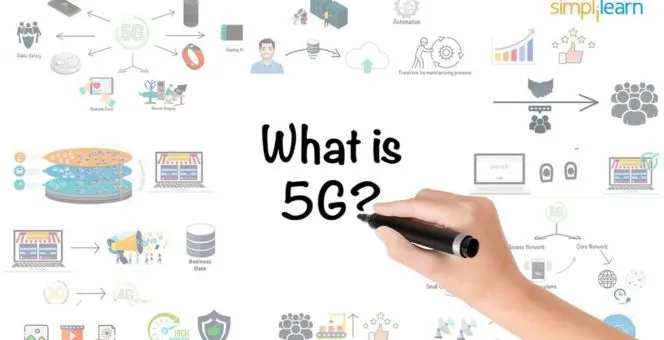
A very exciting application of 5G is logistics/supply chain. With its low latency and high bandwidth, 5G technology in logistics makes immediate tracking possible and will soon see advanced warehouse automation (and possibly even drone deliveries). This will result in a decrease of waste, improved inventory control, and better operations to enable businesses deliver products quicker and more accurately.
2. Self-Driving Cars and Intelligent Communities
5G is essential to smart cities and self-driving cars. 5G’s minimal latency means that self-driving cars can communicate with each other and city infrastructure (like traffic lights) instantaneously, preventing accidents and bottlenecks. In smart cities, 5G is expected to enable the explosion of connected devices and IoT applications that will all require high data rates, like smart traffic systems or environmental monitoring solutions.
3. Telemedicine and Healthcare
The Healthcare Sector Could Be 5G’s Biggest Winner. Given its fast data speeds and low latency, 5G can be used for telemedicine that lets doctors remotely operate on patients or conduct appointments in real time. 5G will also facilitate the swift transfer of huge medical files, such as MRI scans, so that they won’t lag mid-transfer, leading to better patient care.
Benefits of 5G Technology
There are countless pros of 5G technology — far beyond what a lot of people even realize. Here are some of the most significant benefits:
1. Increased Speed & Accessibility
With 5G’s extreme speed, downloading, uploading, and streaming are seamless activities. Compared to 4G, it is a huge leap. People can download files in a matter of seconds and can stream videos in 4K or 8K without buffering.
2. Less latency
5G technology’s most important characteristic is shorter response time, or latency. Latency is the time it takes to transmit data and receive an answer. This is important for the use of VR (Virtual Reality) in self-driving cars and even gaming.
3. Support for More Devices
5G can support the explosion of connected devices. It is possible to support millions of devices within a small range, which also guarantees the reliability of communication and operation of the smart device.
Is 5G the Latest Technology?
Is 5G the newest technology? 5G is the next step forward in wireless technology, which allows for faster speeds, lower latency, and better connectivity. While 6G innovation is already underway, the advanced technology on offer today that is reshaping our digital world is 5G.
Who Invented 5G Technology?
The question of what 5G technology is and how it works, and who invented it, is a rather large one, because 5G is the amalgamation of years of research-and-development work by various telecom companies and engineers all over the planet. Top backers include companies such as Ericsson, Qualcomm, Huawei, and Nokia. These companies have collaborated with governments and international bodies to formalize 5G, explaining its functioning and bringing it to life.
Frequently Asked Questions
1. What is 5G and how does it work?
5G is the fifth generation of wireless technologies. It promises greater speeds, less lag time, and the ability to connect more devices simultaneously. It does this using higher-frequency radio waves, small cells, and advanced antenna technology.
2. 5G technology logistics application.
5G in logistics can improve real-time tracking, warehouse automation, and even use drones for delivery to operate more efficiently with less delay.
3. Is 5G the latest technology?
Yes, 5G is the latest generation of mobile technology offering speed leaps and latency improvements – not to mention an even larger device ecosystem than its predecessors.
4. Who invented 5G technology?
5G technology was a joint effort by various telecom organisations, including Qualcomm, Ericsson, Huawei, Nokia units, and researchers spread across the entire world.