
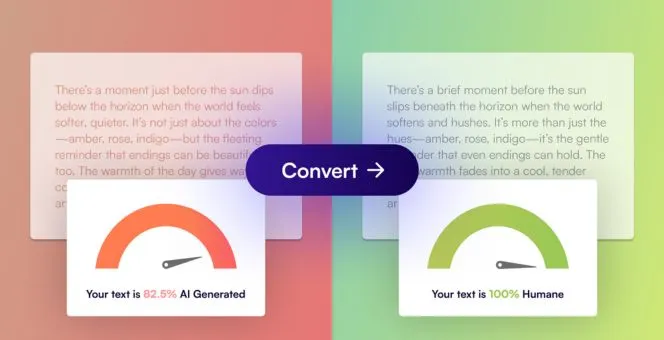
How to Avoid AI Detection in Writing
We are living in a time where writing is everywhere. Blogs, assignments, emails, social posts, and business content are being created every day. At the same time, AI detection tools are becoming more common. If you have ever written something and suddenly wondered why it feels robotic or why a checker flagged it as AI, you are not alone. You and I both know the frustration of putting effort into writing and still seeing it questioned.
Avoiding AI detection in writing is not about tricking tools. It is about writing in a way that feels genuinely human. When writing sounds natural, thoughtful, and experience-based, it stands on its own. Let’s break down what really matters and how you can improve your writing without crossing ethical lines.
Avoid AI detection in writing
The core idea is simple. Writing that reflects human thinking, structure, and emotion is far less likely to be flagged. AI-style writing often follows patterns that are easy to spot.
1. Understanding what detection tools look for
Most detection systems analyze sentence patterns, predictability, tone consistency, and lack of personal context. When writing feels overly polished, repetitive, or neutral, it raises signals.
Why does my writing get flagged as AI
Many writers ask this question after running their work through a detector. The issue is usually not the topic but the style.
1. Common reasons content gets flagged
Writing often gets flagged when it lacks variation, feels overly structured, or avoids personal insight. Human writing naturally includes pauses, shifts in tone, and subtle imperfections.
- Sentences follow the same length repeatedly
- Transitions feel mechanical
- Language sounds overly neutral or generic
These patterns are common in automated content and easy for tools to identify.
What gives away AI writing
AI writing tends to follow predictable habits. Once you recognize them, they become easier to avoid.
1. Signals that trigger detection
AI-like content often avoids strong opinions, personal context, or real-world nuance. It also relies heavily on safe phrasing.
For example, writing that explains everything perfectly but says nothing personal can feel unnatural. Humans do not write that way.
How to make AI writing undetectable
This is not about masking content. It is about rewriting with intention and depth.
1. Making writing feel human
Human writing reflects thinking in progress. It may include short sentences, varied rhythm, and natural emphasis.
Instead of explaining everything in a single smooth flow, allow your writing to pause, reflect, or slightly shift direction. That is how people actually write.
How to check if writing is AI
Before submitting or publishing, many writers want to check their content.
1. Using detection tools wisely
AI checkers can be helpful, but they are not perfect. They should be treated as indicators, not final judges. Always review flagged sections manually.
If a paragraph feels too clean or generic, it probably needs more specificity or context, regardless of what the tool says.
How to detect AI in student writing

Educators often face a different challenge. Student writing has its own patterns, and detection requires careful judgment.
1. Signs educators look for
AI-generated student content often shows advanced structure without depth. The vocabulary may feel mature, but the examples feel vague or disconnected from the class material.
Human student writing usually shows effort, small errors, and personal interpretation, even when imperfect.
Tips for writing AI-friendly content
AI-friendly does not mean AI-written. It means content that aligns with how humans naturally communicate.
1. Practical writing habits that help
These habits improve clarity and reduce detection risk at the same time.
- Vary sentence length and structure
- Use natural transitions instead of formulaic ones
- Add personal reasoning or observation where appropriate
- Avoid over-polishing every paragraph
How to avoid AI detection in writing for blogs and articles
Long-form content often faces more scrutiny because patterns repeat over time.
1. Writing blogs that feel authentic
Break the rhythm occasionally. Ask reflective questions. Shift tone slightly between sections. Humans do not write in perfectly balanced blocks, and your content should not either.
Avoid repeating the same sentence openings or transitions across sections. Even small changes make a big difference.
How to avoid AI detection in academic and professional writing

Formal writing still needs a human touch.
1. Balancing clarity with originality
Professional writing should be structured, but not rigid. Add reasoning behind points instead of listing facts only. Explanation creates authenticity.
Avoid overly safe language. Humans take positions, even subtle ones.
Ethical considerations in avoiding AI detection
It is important to be clear about intent. Avoiding detection should never mean misrepresentation.
1. Writing responsibly
The goal is original, thoughtful writing that reflects your own understanding. When content is truly yours, detection tools become less relevant.
Final thoughts
Avoiding AI detection in writing is not about gaming systems. It is about writing with intention, awareness, and honesty. When you focus on clarity, natural rhythm, and real reasoning, your writing becomes stronger for readers and safer for platforms.
Tools will continue to evolve, but human expression remains unique. Write the way you think, not the way a system predicts, and your work will always stand apart.
FAQ’s
This usually happens when writing becomes overly structured or neutral. Adding personal reasoning and natural variation helps fix this.
Many detectors rely on probability, not certainty. They can flag human writing and miss AI-generated content.
Yes, if your content is original and written by you. The issue is not avoidance, but authenticity.
Write naturally, vary your structure, and focus on explaining ideas in your own words.