

PCOS Hair Loss Treatment in 2026: Causes, Medical Options & What Really Works
PCOS Hair Loss Treatment: What Actually Stops Thinning?
PCOS-related hair loss is not the same as regular shedding. It is frequently gradual, emotionally difficult, and strongly associated with hormonal imbalance. A lot of women see their crowns start to thin, a widening part line, or decreased hair.
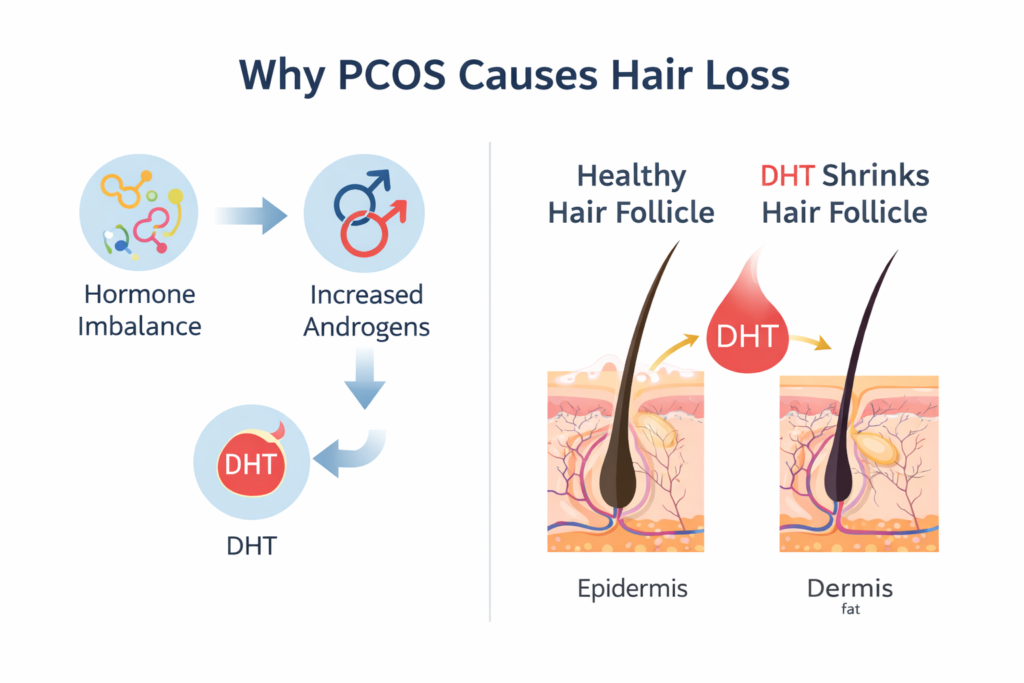
Why PCOS Causes Hair Loss
PCOS affects the body’s ability to manage hormones, which includes the male hormone and androgen control system. The body generates additional DHT when androgen levels rise. DHT causes hair follicles to decrease in size while it shortens the hair growth cycle, which leads to hair loss.
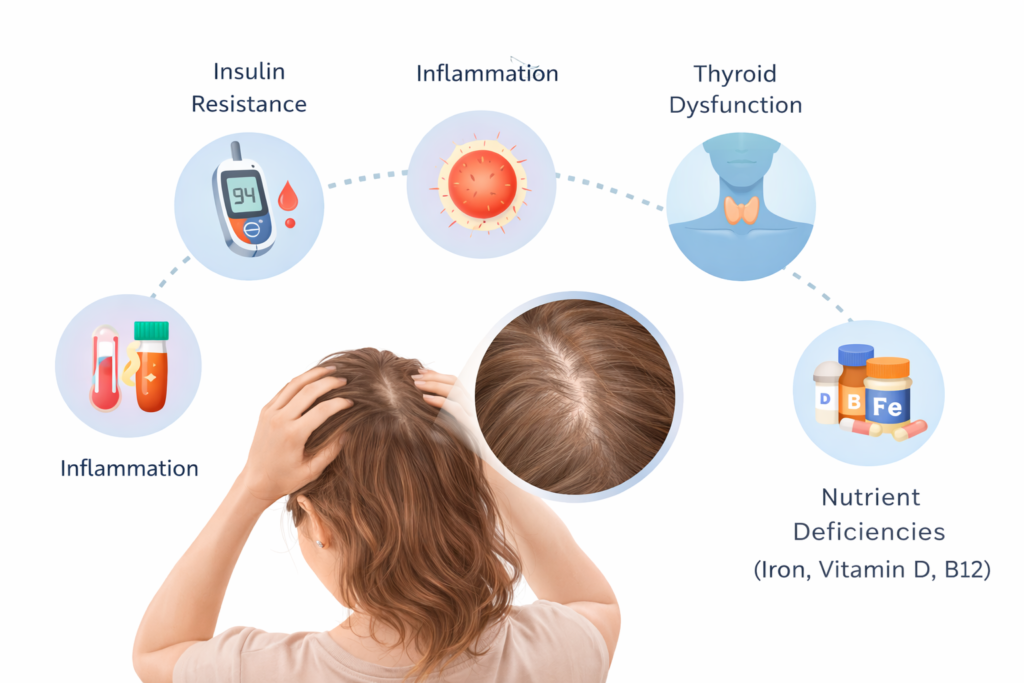
Other contributing factors include:
- Insulin resistance
- Chronic inflammation
- Nutrient deficiencies (iron, vitamin D, B12)
- Thyroid dysfunction
- High stress levels
The effective treatment of PCOS hair loss needs a comprehensive treatment strategy that includes multiple methods.
PCOS Hair Loss Treatment: Where to Start
Before jumping into procedures or products, it’s important to start with testing:
- Hormone panel
- Insulin levels
- Thyroid function
- Ferritin and vitamin levels
In many cases, addressing underlying imbalances can slow shedding in a matter of months.
Recovery strategies for lifestyle:
- Stabilizing blood sugar
- Reduce inflammation by reducing inflammatory foods
- Strength Training
- Stress and sleep control can help you manage cortisol.
After the foundation has been stabilized, you can consider medical treatment.
PRP Treatment for Hair Loss
Because it makes use of your body’s own healing abilities, PRP treatment for hair loss has become more and more popular.

The process involves:
- Drawing a small blood sample
- Concentrating the platelets
- Injecting platelet-rich plasma into the scalp
Platelets contain growth factors that stimulate weakened follicles.
PP Hair Loss Treatment Clarified
You may see references to PP (Platelet-Rich Plasma) hair loss treatment. However, medically this procedure is PRP. Confirm what the clinic offers.
PRP Hair Loss Treatment Near Me: What to Look For
If you’re searching for PRP hair loss treatment near me, consider:
- A clinic experienced in female hair loss
- Transparent pricing and consultation
- Before-and-after documentation
- Medical evaluation prior to injections
Avoid clinics that skip hormone testing entirely.
Stem Cell Treatment for Hair Loss
It focuses on:
- Activating follicle repair
- Encouraging new hair growth
- Improving scalp environment
Early research suggests it may improve density in early-stage thinning, but results vary. While promising, stem cell therapy should be viewed as supportive—not a replacement for hormone management.
Stress-Related Hair Loss Treatment
Stress is a more important factor in PCOS than many people realize. Cortisol increases insulin resistance, which leads to hormonal imbalance and shedding.
Stress-related hair loss treatment may involve:
- Cortisol regulation strategies
- Meditation or breathing exercises
- Improved sleep cycles
- Therapy or counseling
- Adaptogenic nutritional support
Regulating stress can help stabilize hormonal fluctuations, and as a consequence, promote gradual improvement in hair health.
Hair Loss Treatment Products: What Actually Helps?
There are hundreds of hair loss treatment products on the market. Not all are effective for PCOS-related thinning.
Evidence-supported options include:
- Topical minoxidil
- Ketoconazole shampoo
- Caffeine-based scalp serums
- Iron supplementation (if deficient)
- Vitamin D correction
The products need internal hormone management as their most effective pairing. In addition to medical and hormonal support, the way you style your hair can also influence breakage and visible thinning. Tight hairstyles or aggressive fading techniques may increase tension on already sensitive follicles. Choosing structured, low-stress cuts can help maintain shape without damaging density. If you’re exploring how certain trims work with natural curls, read our guide on low taper fade curly hair styling techniques and maintenance tips to understand how haircut structure impacts overall hair health. The products need to be used with internal hormone management for their optimal performance.
New Treatment for Hair Loss in 2026
Research continues to evolve. New treatment for hair loss approaches include:
- Low-level laser therapy
- Advanced regenerative injection combinations
- Personalized hormone mapping
- Combination scalp therapy protocols
Although these strategies are promising, long-term data are still evolving. Patients need to take new fads with a grain of salt.
Hair Loss Treatment News and Emerging Research
Another newsworthy development in hair loss treatment speaks to the critical nature of comprehensive care. And now specialists are bridging the gap between endocrinology, dermatology, and nutrition to more effectively treat PCOS-related thinning.
The treatment of the future seems to be personalized, not one-size-fits-all.
Choosing Haircuts That Minimize Visible Thinning
Layered styles like the modern wolf cut hairstyle can create movement and volume, which may help hair appear fuller without putting stress on fragile strands.
A Practical Step-by-Step Recovery Plan
If you want structure, here’s a simplified roadmap:
- Test hormone and insulin levels
- Correct deficiencies
- Stabilize blood sugar
- Manage stress
- Introduce topical support
- Consider PRP if shedding persists
- Evaluate advanced procedures only if necessary
Consistency matters more than speed.
When to See a Specialist
You should consult a healthcare professional if:
- Hair thinning is rapidly progressing
- You notice scalp inflammation
- Menstrual cycles are irregular
- Acne or excess hair growth accompanies thinning
Early intervention improves outcomes.
Final Thoughts
If you have been diagnosed with PCOS and are getting hormonal treatment for it, it is going to take time, and there is no miracle treatment that will restore your hair overnight. The best combination of treatments will come from the best medical advice and some professional lifestyle treatment. Steer clear of any miracle marketing ads that make promises of instantaneous hair regrowth, as those will just be wasting your time and money since hair regrowth due to a hormonal imbalance takes a lot of time and patience. If you are using the correct treatment methods, it will be possible to see visible improvements within as little as six to twelve months.
Frequently Asked Questions
In numerous instances, it is possible for hair to grow back, especially if a person experiences hormonal and insulin regulation.
The best combination of treatments that will work most effectively is a combination of hormonal regulation, PRP treatments, and some other auxiliary products.
Most people will see some of the initial results within about three months and the majority of the results within around six months.
Stem cell therapy is more recent, and some people say it is beneficial, but there is a lot less evidence, and so PRP is supported more.
Yes, especially since chronic stress increases cortisol, and that will worsen any hormonal imbalances and possibly lead to more hair loss.