

Does Nutritional Yeast Go Bad? A Complete Storage & Freshness Guide
Does Nutritional Yeast Go Bad? Storage Facts
Quick Answer
Yes, nutritional yeast can go bad over time if exposed to moisture, heat, or air. Although it has a relatively good shelf life, lack of storage in the right conditions may lead to flavor loss, clumping, or mold formation. If you’re a nutritionally savvy individual, stocking your pantry with nutritional yeast is likely part of the plan—but then you’ll have to ask yourself: does nutritional yeast go bad? Unlike fresh foods, it does not spoil easily. Its safety and quality are significantly affected by how it’s stored and handled after opening.
In this guide, you’ll learn how long it lasts, how to discern if it has gone bad, and how you should store it correctly.
What Is Nutritional Yeast?
A deactivated strain of Saccharomyces cerevisiae is known as nutritional yeast. Unlike baker’s yeast, it does not ferment or grow. It is processed, dried, and sold in flake or powder form.
It is valued for:
- B-complex vitamins
- Plant-based protein
- Amino acids
- Beta-glucans
- A savory, cheesy flavor
Deactivated yeast is sometimes added to homemade pet food, and many pet owners ask whether dogs can have nutritional yeast.
Can Nutritional Yeast Go Bad?
Is it possible for nutritional yeast to go bad? Absolutely—though it deteriorates slowly.
Nutritional yeast doesn’t “go bad” the way that perishable foods do. Instead, it gradually loses quality. Exposure to air and humidity can cause moisture to be introduced into the item, leading to clumping or, in extreme cases, mold.
Common reasons it goes bad include:
- Improper sealing after opening
- Storing in a humid kitchen
- Exposure to heat or sunlight
- Using wet utensils inside the container
While spoilage is uncommon when stored correctly, quality decline is inevitable over time.
Does Nutritional Yeast Expire?
Many people ask, does nutritional yeast expire?
Yes, it comes with a best-by date. However, that date reflects peak freshness—not a strict safety deadline.
After the printed date:
- Flavor may weaken
- Nutritional potency may decline
- Texture may change
If it smells normal, looks dry, and shows no signs of contamination, it is often safe beyond the expiration date. However, always check before using.
How Long Is Nutritional Yeast Good For?
The shelf life depends on storage conditions.
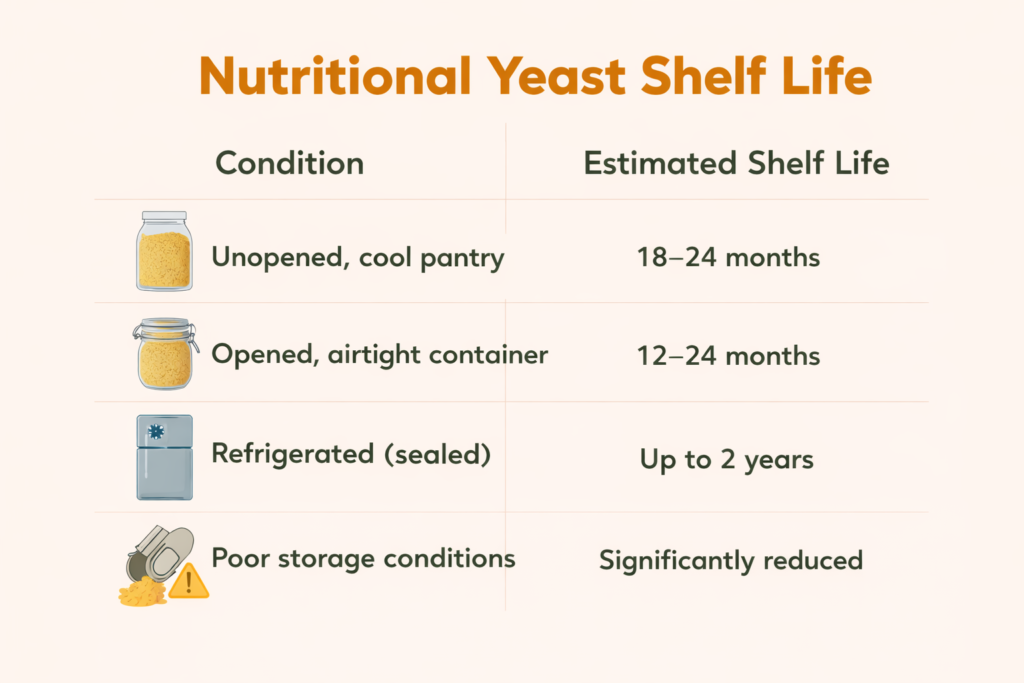
Shelf Life Table
| Condition | Estimated Shelf Life |
| Unopened, cool pantry | 18–24 months |
| Opened, airtight container | 12–24 months |
| Refrigerated (sealed) | Up to 2 years |
| Poor storage conditions | Significantly reduced |
Unopened
It can last up to two years when stored in a cool, dry place.
Opened
Once opened, oxygen exposure begins. Keeping it sealed tightly is critical.
Refrigerated
In humid climates, refrigeration may extend freshness. Just ensure the container is moisture-proof.
Signs Nutritional Yeast Is Bad
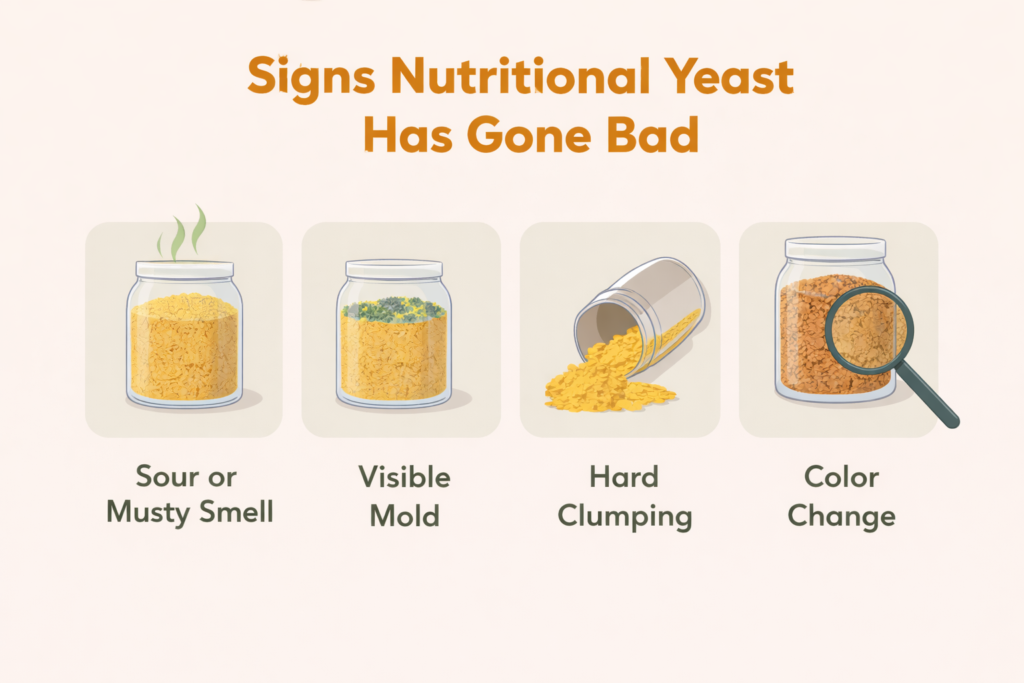
Recognizing the signs Deactivated yeastis bad helps prevent using degraded product.
1. Sour or Musty Smell
Fresh nutritional yeast smells mild and nutty. A sharp or unpleasant odor is a warning sign.
2. Visible Mold
Any dark spots, fuzziness, or unusual growth means it should be discarded immediately.
3. Hard Clumping
Minor clumping can occur naturally, but large hard clusters often indicate moisture exposure.
4. Color Change
If it appears darker or unusually dull, quality may have declined.
5. Bitter Taste
If the flavor is off, or if it tastes unusually bitter, then it has passed its peak.
When uncertain, discard it. You can use any substitutions instead of nutritional yeast, and it’s inexpensive too.
How Does Consuming Expired Nutritional Yeast Affect You?
In most cases, slightly expired nutritional yeast is safe to consume if it shows no signs of spoilage. The worst-case scenario is for the food to have reduced nutritional value or flavor. But if it gets wet, you can have a bit of an upset stomach. Products that are moldy should never be eaten.
Proper Storage Tips
For spoilage prevention and shelf life extension:
- Store in an airtight container.
- Store in a cool, dry pantry
- Avoid direct sunlight
- Never use wet spoons
- Reseal immediately after use
Proper dry storage aligns with general food safety recommendations provided by the USDA.
Refrigeration vs Pantry Storage
Pantry storage works well in dry environments. In humid areas, refrigeration offers added protection.
If refrigerating:
- Use a tightly sealed container
- Allow it to reach room temperature before opening to avoid condensation
Both storage methods work well as long as moisture is properly controlled.
Does Nutritional Value Decline Over Time?
Even if it doesn’t seem spoiled, Deactivated yeast can lose its power over time.
Some vitamins, particularly enriched B vitamins, can break down slowly over time.
When Should You Throw It Away?
Discard nutritional yeast if:
- Mold is visible
- It smells sour or musty
- It tastes strongly bitter
- Moisture contamination occurred
- Packaging was damaged
When in doubt, replacement is safer than risk.
Final Verdict
So, does that mean nutritional yeast goes bad? Yes—but slowly. Well-stored, it can last up to two years. Spoilage is usually caused by moisture exposure rather than time alone. Knowing expiration dates, storage, and how to tell if nutritional yeast is bad guarantees safety as well as quality. With care, it’s a dependable pantry player for months.
Frequently Asked Questions
Although it can lose its freshness after opening, it usually keeps for up to two years if stored in an airtight container.
Not if the container is well-sealed. In humid climates, refrigeration may be of assistance.
Yes, although when stored properly, unopened packages can stay fresh for up to 24 months.
12-24 months normally if kept sealed and away from moisture.
Check for mold, a sour smell, clumping from moisture and hardening, discoloration, or a bitter taste.